







Sovereignty and Defense: Venezuela’s Unique Air Shield in South America
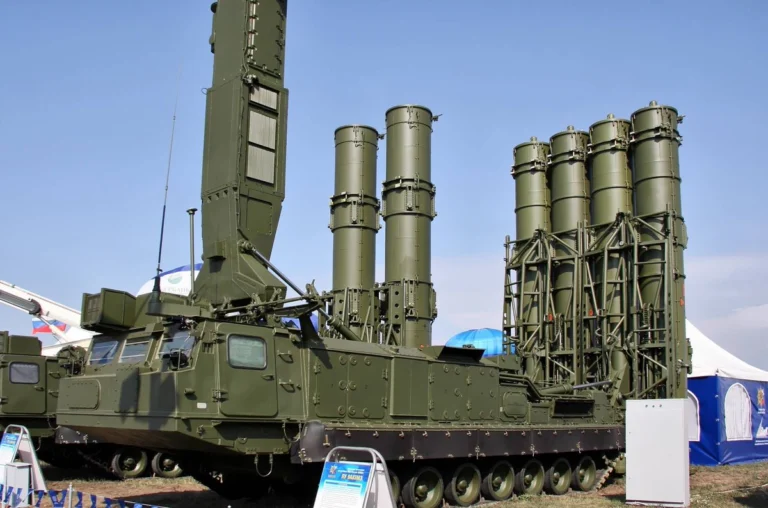
Photo: CODAI.
October 24, 2025 Hour: 5:44 pm
🔗 Comparte este artículo
In an era where geopolitical tensions define international relations, the conversation surrounding national defense has never been more pertinent.
In South America, Venezuela stands out for its exceptional air defense capabilities.
With a robust anti-aircraft system that rivals those of larger nations, Venezuela has developed a unique strategy to project its air defense and ensure sovereignty over its airspace.
Related: President Maduro Launched 72-Hour National Defense Drills Amid Rising U.S. Tensions
The Strength of Venezuela’s Air Defense System
Venezuela possesses one of the most advanced air defense systems in South America, designed explicitly to counteract any potential aerial threats.
With a blend of cutting-edge technology and strategic military planning, the Venezuelan military has established a formidable shield to deny aerial superiority to any adversary.
Central to this air defense framework is the Sukhoi Su-30 MK2 fighter jets, which have gained a reputation for agility and combat effectiveness.
These aircraft are complemented by the General Dynamics F-16 Fighting Falcon, providing a multi-layered approach to aerial combat and protection.
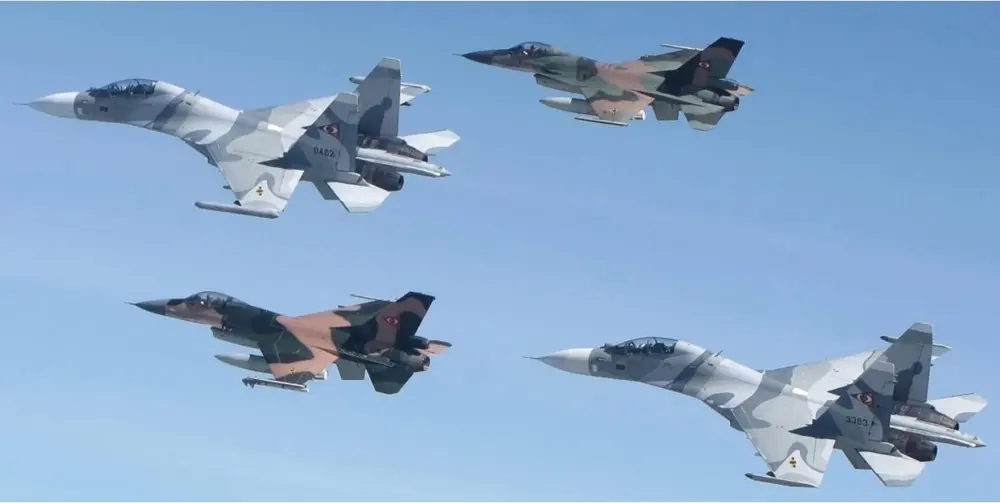
Together, they create a comprehensive network that covers various operational levels of their airspace.
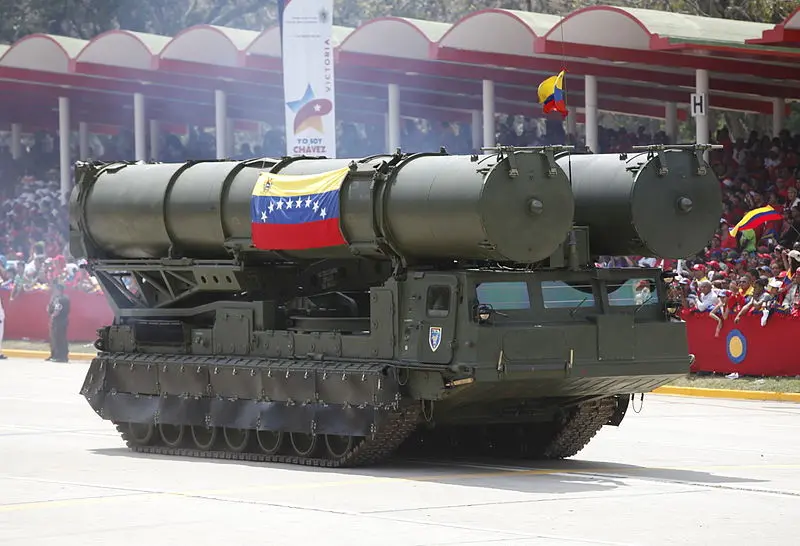
In addition to these fighter jets, Venezuela employs a diverse assortment of missile launchers, including the portable Igla-S systems and the heavy-duty S-300 long-range missile system.
This diverse arsenal ensures that Venezuela can respond to a wide array of threats, from low-flying aircraft to high-altitude missiles.
The S-300: A Game Changer for Regional Defense
What truly sets Venezuela apart in the realm of air defense is its possession of the S-300 missile system, making it the only country in South America equipped with this sophisticated technology.
The S-300 is widely regarded as one of the most powerful missile defense systems in the world, specifically designed to protect airspace from enemy attacks.
With an impressive detection range of up to 200 kilometers, the S-300 can identify and track multiple targets simultaneously.
It possesses the capability to engage and destroy various aerial threats, including advanced fighter jets and ballistic missiles.
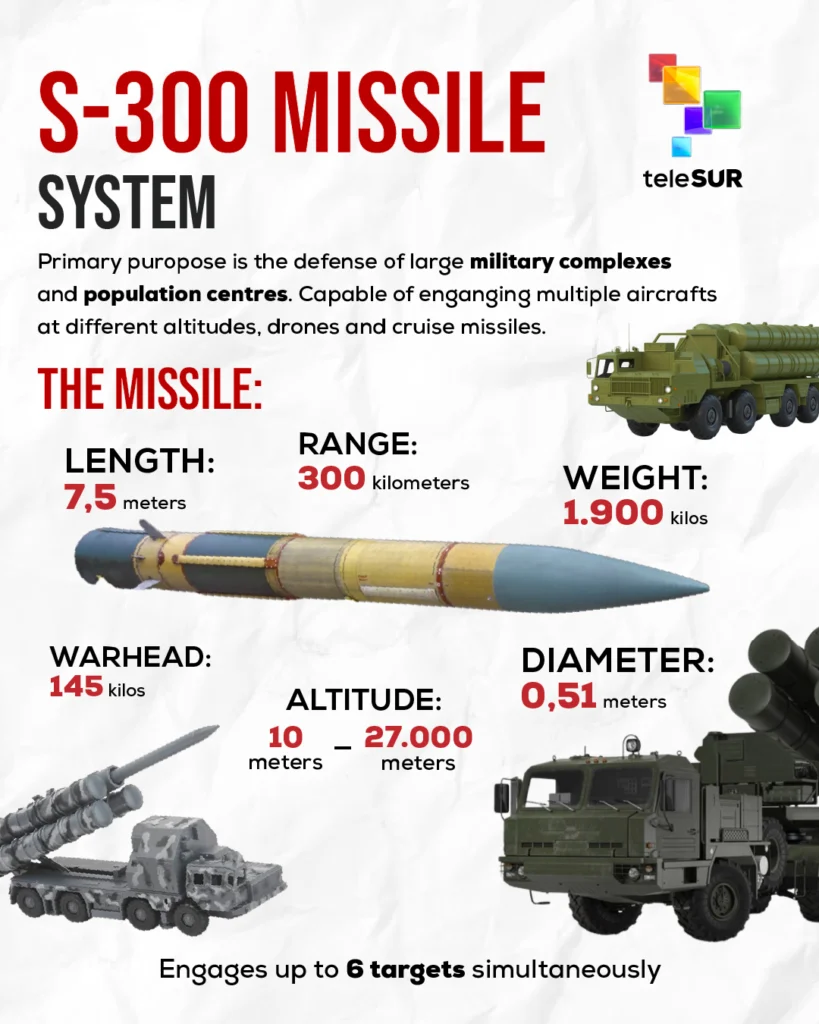
Each battery of the S-300 can monitor up to 100 potential targets and target 24 of them at the same time, marking a significant strategic advantage for Venezuela.
This operational prowess goes hand-in-hand with state-of-the-art technology, allowing for the interception of complex aerial threats.
The mere presence of the S-300 in Venezuela’s military inventory sends a clear signal regarding its commitment to national sovereignty and regional stability.
The Buk-M2E System: Versatile Ground-Based Defense
Supporting the aerial capabilities is the Buk-M2E missile system, mounted on a mobile MZKT chassis. Weighing 22 tons, these vehicles are equipped to carry anti-aircraft batteries weighing up to 14 kilos.
The Buk-M2E exemplifies versatility, featuring mobility and speed—developing up to 80 km/h thanks to its powerful 420 horsepower engine.
This system adds another layer of tactical flexibility to Venezuela’s defense strategy.
Its deployment enhances the military’s ability to respond swiftly to aerial threats and reinforces the overall integrity of its airspace defense network.
Geopolitical Implications and the Commitment to Sovereignty
The acquisition of advanced air defense systems like the S-300 and Buk-M2E represents more than just military might; it encapsulates Venezuela’s strategic aim to assert its sovereignty in a region marked by potential imperialist threats.
In a world where national boundaries are often challenged, having a resilient defense posture is paramount for Venezuela.
The presence of such sophisticated military technology not only serves as a deterrent against external aggression but also resonates within the political narrative, emphasizing a stance against perceived imperialism.
As regional dynamics evolve, Venezuela’s emphasis on dissuasion through strength becomes a central theme in its defense strategy, reflecting a deeper commitment to maintaining peace and security within its borders.
A Unique Position in Latin America and the Caribbean
Venezuela’s air defense capacity positions it uniquely within Latin America and the Caribbean, setting a precedent for military preparedness and strategic sovereignty.
By investing in advanced systems like the S-300, alongside a capable fleet of combat aircraft and mobile missile units, Venezuela underscores its dedication to safeguarding its airspace from any potential adversaries.
Venezuela’s strong air defenses reflect national pride and deter threats, reinforcing its sovereignty and security in a volatile region.
In doing so, Venezuela not only strengthens its military stature but also affirms its role as a key player in the defense landscape of Latin America and the Caribbean, where an imperialist threat is currently positioned.
Venezuela’s assertive stance underscores its commitment to safeguard its sovereignty and promote its interests within the region, marking a new chapter in its geopolitical and defense trajectory against what has become a permanent threat to its sovereignty since 1998.
Author: Manuel F. Diaz
Source: teleSUR